Natural Gut Tennis Strings vs. Multifilament: Which Should You String with?
Walk into any tennis pro shop and ask what to string with, and you'll get opinions from every direction — poly loyalists, gut purists, and everyone in between. But for players who prioritize feel and arm health over raw spin and durability, the real decision usually comes down to two options: natural gut and multifilament. Both are built to deliver comfort and a soft, connected feel at contact, and both are miles ahead of stiff polyester in that department. The differences between them, though, are significant enough that picking the wrong one can mean leaving performance — or your elbow — on the table.
What Natural Gut Actually Is
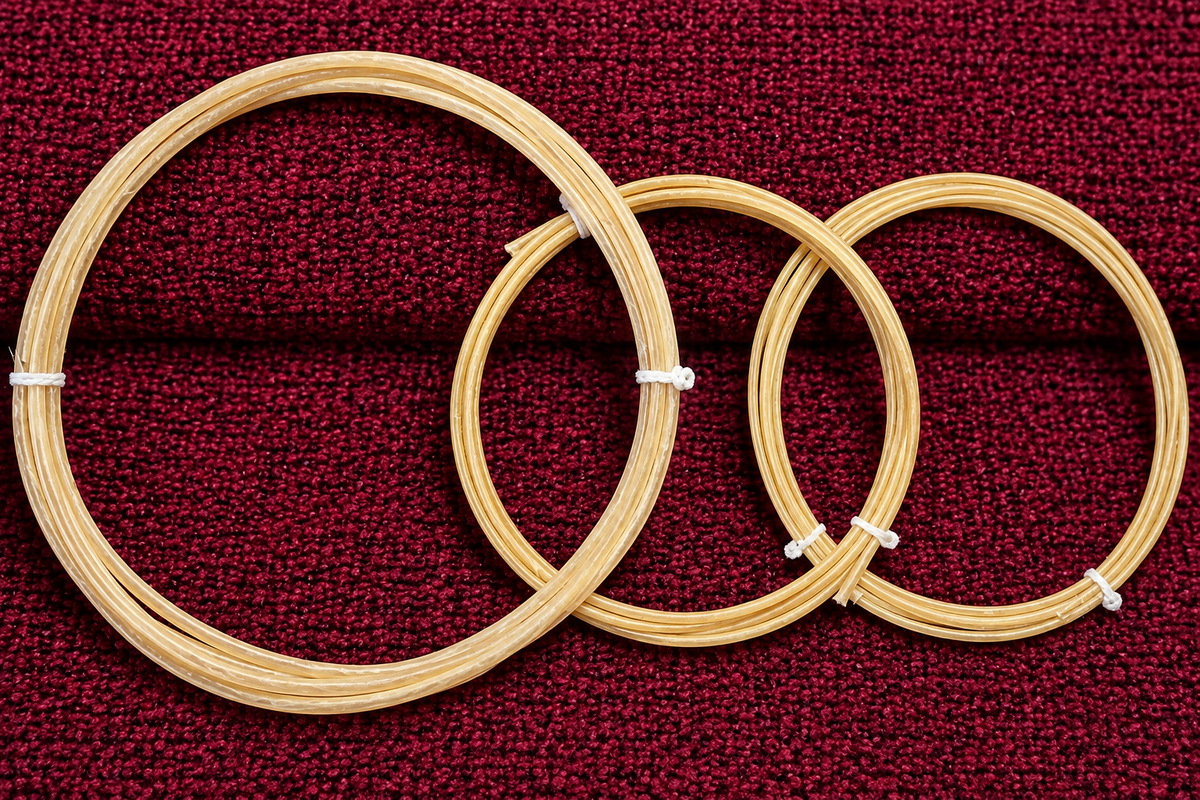
Natural gut tennis string is made from processed natural fiber, historically drawn from beef serosa, that's cleaned, twisted, and dried into thin strands before being combined into a finished string. It's the oldest string material in tennis, predating synthetic alternatives by decades, and it remains the material against which every other "soft" or "comfort" string is ultimately judged. What makes gut special is its elasticity: it stretches and rebounds more efficiently than synthetic fibers, which is why it holds tension longer and provides a noticeably more lively, responsive feel at contact than almost anything else strung in a racquet.
Because it's a natural, hand-processed material, quality varies significantly between manufacturers. Diameter consistency, curing quality, and the coating applied to protect the string from moisture all affect how a given set of gut strings performs and how long it lasts. That's a big part of why serious players tend to be picky about whose gut they use, rather than treating it as a commodity purchase.
What Multifilament Actually Is
Multifilament string is a synthetic alternative engineered specifically to approximate gut's comfort and feel without gut's cost or maintenance requirements. Instead of a single natural fiber, multifilament strings are built from hundreds or even thousands of tiny synthetic filaments — often nylon-based — bundled together and wrapped in an outer coating. That bundled construction is what gives multifilament its softness; the individual filaments flex and move slightly against each other at contact, producing a cushioned feel that's closer to gut than any single-filament synthetic string can achieve.
Multifilament strings are considerably more affordable than natural gut and hold up better against moisture, which makes them a popular choice for players who want gut-like comfort without gut's price tag or its sensitivity to weather.
Feel and Touch
This is where natural gut still wins for most players who've tried both. Gut's elasticity gives it an exceptionally lively, connected feel — many players describe it as feeling like an extension of their arm rather than a string bed. Multifilament comes closer to that sensation than any other synthetic option, but even premium multifilament strings tend to feel slightly firmer and less dynamic than gut once you've spent real time with both. For touch players, serve-and-volley specialists, and anyone who relies heavily on feel for drop shots, touch volleys, and delicate placement, that difference is often decisive.
Power and Control
Gut's superior elasticity translates directly into a livelier response off the strings, giving players more effortless power without swinging harder — the ball tends to come off the racquet with a bit more pop for the same swing speed. Multifilament also produces solid power thanks to its flexible construction, though generally with a touch less trampoline effect than gut. Neither string is known for exceptional spin generation or bite on the ball compared to textured polyester, so players who build their game around heavy topspin often reach for a hybrid setup instead of pure gut or pure multifilament in either mains or crosses.
Arm and Injury Protection
For players managing tennis elbow, golfer's elbow, or general arm and shoulder strain, this is frequently the deciding factor — and it's an area where both strings outperform stiffer synthetics by a wide margin. Natural gut is widely considered the gentlest string on the arm available, thanks to its superior shock and vibration absorption at impact. Multifilament is the next best thing, absorbing meaningfully more vibration than monofilament or polyester strings, even if it doesn't quite match gut's dampening properties. Players coming back from arm injuries, or those who've simply had enough of elbow soreness after long matches, are almost always steered toward one of these two materials rather than a stiffer alternative.
Durability and Tension Maintenance
Here the comparison gets more nuanced. Natural gut actually holds tension longer than most synthetic strings, including multifilament — its elasticity means it doesn't go dead nearly as quickly, which is a big part of why so many tour-level players who prioritize feel still string with it despite the cost. Where gut struggles is raw durability against abrasion and moisture: it's more prone to fraying under heavy topspin or repeated frame contact, and it's genuinely sensitive to humidity and rain, which can weaken or even snap a gut string that gets soaked. Multifilament generally handles moisture and everyday wear better than gut, though it does lose tension somewhat faster over time. Neither string matches polyester's raw abrasion resistance, which is exactly why heavy topspin baseliners with big, fast swings often lean toward poly or a poly hybrid instead.
Cost
Natural gut is, without question, the more expensive of the two, often by a wide margin, because it requires far more labor-intensive processing than manufactured synthetic fiber. Multifilament sits in the middle of the market — pricier than basic synthetic gut or polyester, but considerably more affordable than natural gut — which is exactly why it's become the default "comfort string" recommendation for club and recreational players who want gut-like feel without gut-like cost.
Who Should Choose Which
If you're a competitive or touring-level player who prioritizes feel above nearly everything else, restrings frequently enough that gut's moisture sensitivity isn't a major concern, and has the budget for it, natural gut remains the gold standard. If you're managing arm issues on a tighter budget, play in a humid or rainy climate, or simply don't want to think about restringing before every big match, multifilament delivers most of gut's comfort with meaningfully less maintenance and cost. Many players also split the difference with a hybrid setup — natural gut or multifilament in the mains for feel and comfort, paired with a more durable polyester in the crosses for spin and control. It's an extremely common setup on tour precisely because it captures much of what makes each material valuable while minimizing its weaknesses.
Where NG String Fits In
NG String's natural gut tennis strings are built around exactly this feel-first philosophy. The PROV5(+) line uses a molecular coating process aimed at extending durability without sacrificing the playability that makes gut worth choosing in the first place, while the standard PROV5 series focuses on that unmatched feel and touch tour players look for. For players who want gut's comfort at a more accessible price point, the V5 series is built to deliver balanced power, comfort, and value. All three lines are made with the same attention to consistency that founder Kevin Smith — a former professional tennis player himself — built the company around, and have been evaluated through independent testing from racquet stringing professionals in the industry.
If you're weighing gut against multifilament for your own game, our team can help you think through gauge, tension, and whether a hybrid setup makes sense for your style of play. Reach us at ngstring.com or call 619-559-2005.
Stringing and Care Tips
Whichever material you choose, a few habits go a long way. String gut and multifilament at the tension your racquet manufacturer and stringer recommend rather than guessing — both materials perform best within a fairly specific range, and over-tensioning shortens their life. Keep racquets out of hot cars and direct sun, since heat accelerates tension loss in any string. If you're playing with natural gut, try to avoid extended play in rain or heavy humidity, and dry your strings promptly if they do get wet. And regardless of material, most players find their string bed starts losing its best playability well before it actually breaks, so restringing on a schedule tied to how often you play — not just when a string snaps — keeps your racquet performing the way it did on day one.
Frequently Asked Questions
-
What's the main difference between natural gut and multifilament tennis strings?
Natural gut is a processed organic fiber known for the best feel, power, and tension maintenance available, while multifilament is a synthetic bundle of fibers engineered to approximate gut's comfort at a lower cost and with better moisture resistance.
-
Which string is better for tennis elbow, gut or multifilament?
Both are excellent choices for arm comfort compared to stiffer strings, but natural gut is generally considered the gentlest option on the arm due to its superior vibration and shock absorption, with multifilament a close second.
-
Does natural gut really lose performance in the rain?
Yes. Natural gut is sensitive to moisture, and playing extensively in rain or high humidity can weaken the string or shorten its lifespan. Multifilament handles moisture considerably better.
-
Is natural gut worth the extra cost compared to multifilament?
For players who prioritize feel, touch, and tension stability above all else — and who restring often enough that durability is less of a concern — many find the cost difference worthwhile. Players on a budget or in humid climates often get excellent results from multifilament instead.
-
Can I mix natural gut or multifilament with polyester in a hybrid setup?
Yes, and it's a very common approach. A gut or multifilament main paired with a polyester cross is a popular way to combine comfort and feel with added spin potential and durability.
-
How often should I restring with natural gut or multifilament?
It depends on how often and how hard you play, but many players restring every 20–40 hours of play, or roughly every few months for regular players, since both materials lose their best playability well before they physically break.

Written by Javier Lopez